Guruvayur Temple
Dress Code
Know what to wear before you visit Guruvayur Temple — with simple clothing examples for men, women and children.
For Men:
The Shirt Must Come Off
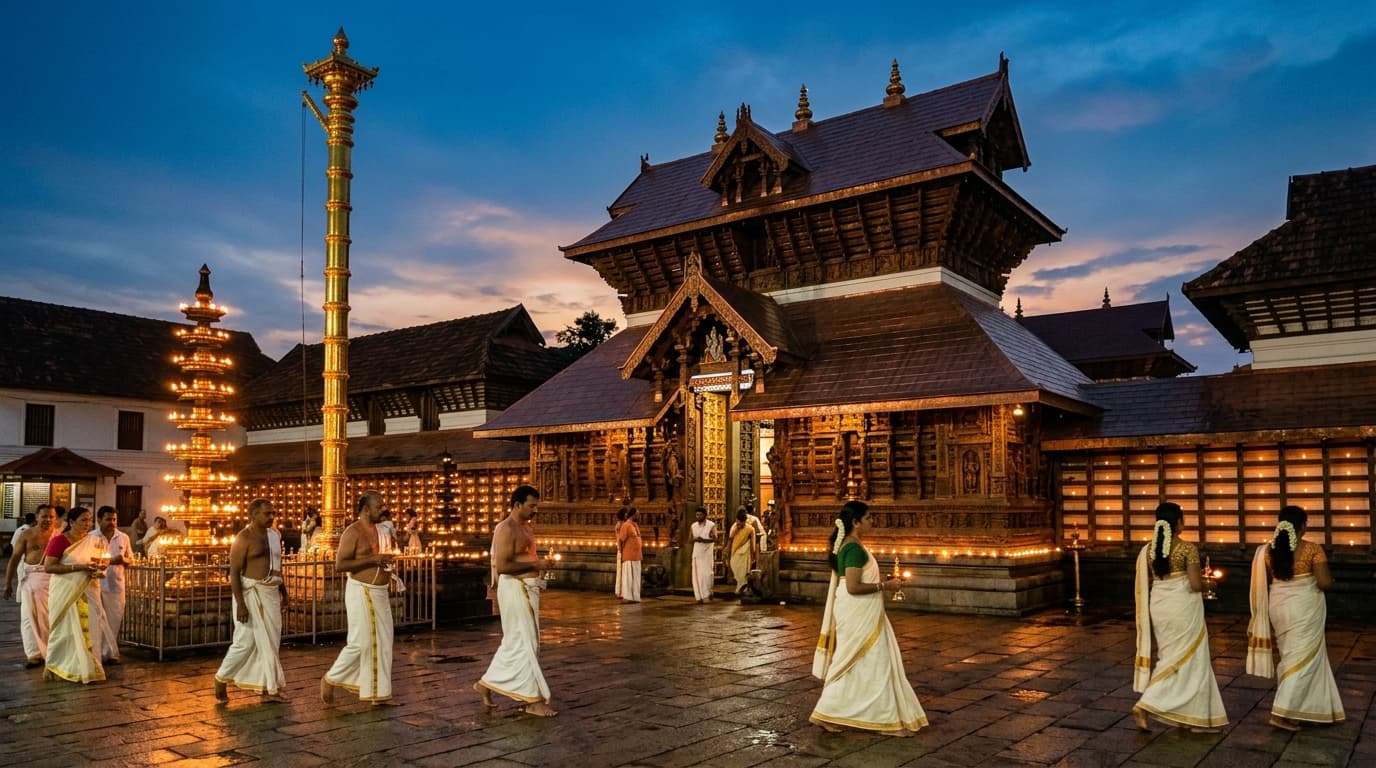
Male devotees entering the inner temple enclosure (Nalambalam) are required to wear a traditional Mundu (Dhoti) and must remove all shirts, T-shirts, banyans, vests, and stitched upper garments.
Kerala Tourism & Devaswom Guidance:
Shirts, trousers, vests, pyjamas, casual lungis, printed dhotis, and jeans are strictly not allowed for men. An unstitched cotton Angavastram (shawl) may be worn over the shoulders.
Angavastram permitted loosely over shoulders
Men's Dress Code
A traditional Mundu around the waist and an uncovered upper torso are essential for male pilgrims entering the inner temple enclosure.
Required & Permitted
Prescribed traditional attire
Mundu / Dhoti (Veshti)
REQUIREDPlain white, off-white, or cream-colored traditional cotton cloth wrapped around the waist. Traditional gold kasavu borders or thin colored borders are accepted.
Bare Upper Body (No Stitched Garments)
REQUIREDMale devotees must remain bare-chested inside the inner temple enclosure. Shirts, T-shirts, vests, coats, and banyans must be completely removed.
Angavastram (Traditional Upper Cloth)
PERMITTEDA plain white or kasavu traditional cotton shawl/towel may be draped loosely over the shoulders or folded around the chest. It is distinct from stitched shirts.
Small Waist Cloth (Thorthu)
PERMITTEDA small traditional cotton towel worn around the waist over the mundu is widely accepted.
Strictly Prohibited
Turned away at gate checkpoints
Stitched Shirts & T-Shirts
Any stitched garment covering the upper torso is not permitted inside the inner temple.
Jeans, Trousers, Cargo Pants & Shorts
Western pants, denim jeans, trousers, pyjamas, and shorts are not allowed for adult male devotees.
Colored / Printed Lungis
Patterned, dark, or casual checkered lungis are not permitted as temple lower garments.
Leather Belts & Leather Wallets
Leather accessories with metallic buckles must be removed before entering.
How a Man's Clothing Transforms Before Entry
You do not need to travel across Kerala in temple attire. Follow this simple 4-step routine when you arrive.
Travel & Arrival
Normal Casual Attire (Jeans, T-Shirts, Shirts)
You may travel to Guruvayur wearing normal comfortable travel clothes. The strict traditional dress code applies only when entering the temple grounds.
Change Into Traditional Mundu
Mundu / Dhoti Wrapped Around Waist
Wear a plain white, cream, or traditional kasavu-bordered cotton Mundu securely tied around the waist.
Remove Shirt & Upper Garments
Bare Torso / Optional Angavastram
Men must remove their shirts, T-shirts, banyans, and vests before passing the entrance gate into the Nalambalam.
Enter in Traditional Attire
Bare-Chested Mundu Attire
Proceed through the covered queue into the inner temple with your upper body uncovered in accordance with ancient Kerala custom.
Why Do Men Remove Their Shirts in Kerala Temples?
Removing stitched upper garments before entering the sanctum is an ancient ritual tradition followed in Guruvayur and many classical Kerala temples. It signifies shedding external social pretenses and worldly identity, approaching the deity in complete humility, pure simplicity, and equal devotion.
Can Men Cover Their Upper Body? The Angavastram Option
If you prefer not to have your upper torso entirely bare, temple regulations permit wearing an Angavastram (an unstitched traditional cotton shawl). Because it is an unstitched piece of sacred fabric, it complies with traditional Kerala Tantric temple purity standards.
How to Wear It:
Draped loosely over both shoulders or folded across the chest. It must not be tied tightly like a stitched shirt.
Permitted Fabric:
Plain white, cream, or gold kasavu-bordered cotton. Synthetic or modern graphic shawls are not accepted.
Women's Dress Code
Traditional Indian attire reflecting modesty and grace. Sarees, Kerala Set-Mundu, and Salwar Kameez with Dupattas are officially permitted.
Approved Traditional Attire
Accepted by Guruvayur Devaswom
Traditional Indian Saree
RECOMMENDEDClassic Indian sarees of any modest traditional color, cotton, or silk fabric. The most traditional and celebrated choice for temple worship.
Kerala Set-Mundu (Mundum Neriyathum)
RECOMMENDEDAuthentic two-piece traditional Kerala attire with gold kasavu borders, embodying the purest cultural heritage of the region.
Churidar / Salwar Kameez with Dupatta
PERMITTEDModest traditional Salwar sets are officially permitted by temple authorities, provided the Dupatta (shawl) is properly draped over the chest.
Traditional Pavada & Blouse (Half-Saree)
PERMITTEDTraditional long skirt and blouse (Pattu Pavada) worn by young women and girls.
Prohibited Western Casuals
Strictly turned away at gate
Western Jeans, Trousers & Cargo Pants
Denim pants, western trousers, track pants, and casual trousers are not permitted for temple entry.
Shorts, Midi Dresses & Mini Skirts
Western skirts, short dresses, and casual shorts are strictly prohibited.
Sleeveless Tops & Transparent Clothing
Tops without sleeves, deep-neck western clothing, or sheer transparent fabrics are not allowed.
Leggings without Dupattas
Tight western leggings worn without traditional knee-length kurtas and dupattas are not accepted.
Children's Dress Code
Traditional, lightweight cotton attire keeps young boys and girls comfortable and culturally aligned during temple darshan.
Young Boys (Under 10)
Small traditional cotton Mundu or comfortable traditional dhotis. Toddlers under 5 may wear simple modest cotton shorts.
Young Girls (Under 10)
Traditional Pattu Pavada (skirt & blouse), modest frocks, or traditional Kerala dresses.
Infants & Toddlers
Comfortable, breathable cotton baby clothes suitable for warm weather.
Older Children (10+ Years)
Follow standard adult traditional dress codes: Mundu (bare-chested) for boys; Pavada, Salwar, or Saree for girls.
Traditional Attire Gallery
Visual examples of authentic traditional Kerala garments and officially approved temple attire for men, women, and children.
Plain White Mundu (Dhoti)
RecommendedStandard single or double cotton dhoti worn neatly around the waist. The timeless, essential attire for male temple entry.
Kasavu Border Mundu
RecommendedTraditional Kerala cotton dhoti featuring an elegant golden zari (kasavu) border, widely worn during festivals and auspicious darshans.
Mundu with Angavastram
PermittedMundu paired with a traditional unstitched upper cloth (shawl) draped loosely over the shoulders.
Traditional Saree
RecommendedClassic Indian saree of any traditional material and modest color, paired with a traditional blouse.
Kerala Set-Mundu (Mundum Neriyathum)
RecommendedThe iconic two-piece traditional Kerala costume with golden borders, representing classic Malayali heritage.
Churidar / Salwar Kameez with Dupatta
PermittedModest traditional Salwar Kameez or Churidar suit. Officially permitted under current temple regulations.
Children's Pattu Pavada & Baby Dhoti
RecommendedTraditional silk or cotton skirt-blouse for young girls, and mini cotton dhotis for young boys.
Common Dress-Code Mistakes
Avoid these frequent misunderstandings to ensure an effortless, respectful passage through the Gopuram gates.
Attempting to Wear a Shirt Inside
Common Error #1What Pilgrims Do Wrong:
Walking past the Gopuram security gates while still wearing a shirt, T-shirt, or banyan.
The Correct Way:
Remove all upper garments before entering the Nalambalam. Carry an optional Angavastram over shoulders if desired.
Arriving in Denim Jeans or Trousers
Common Error #2What Pilgrims Do Wrong:
Assuming western casuals like jeans, tracksuits, or trousers are acceptable for male temple entry.
The Correct Way:
Men must wear a traditional Mundu (Dhoti). Stitched pants are strictly turned away by security.
Wearing a Patterned or Checkered Lungi
Common Error #3What Pilgrims Do Wrong:
Confusing casual house lungis with the formal white/cream temple Mundu.
The Correct Way:
Only plain white, off-white, or kasavu-bordered traditional dhotis are accepted. Casual lungis are prohibited.
Wearing Salwar Without a Dupatta
Common Error #4What Pilgrims Do Wrong:
Wearing churidar or salwar tops without properly draping the dupatta shawl.
The Correct Way:
Ensure the dupatta is worn draped respectfully across both shoulders and the chest.
Wearing Leather Belts with Buckles
Common Error #5What Pilgrims Do Wrong:
Wearing heavy leather belts or metallic buckles over traditional dhotis.
The Correct Way:
Tie the mundu traditionally using waist folding, or use a simple cloth belt (Aranjanam / cotton cord).
Forgot to Bring a Mundu? Don't Worry
Traditional cotton Mundus, kasavu dhotis, and pre-stitched readymade velcro dhotis (which require zero tying skill) are readily available from dozens of traditional clothing stores surrounding East Nada and West Nada.
Before Leaving for the Temple
Tick off your family's clothing preparation before stepping out of your hotel room.
For Men
Clean White / Cream Mundu (Dhoti)
Traditional cotton dhoti tied securely around waist.
Ready to Remove Shirt & Upper Garments
Must be removed before entering the inner Nalambalam.
Optional Angavastram (Upper Shawl)
Allowed as a traditional unstitched upper cloth.
No Leather Belts or Wallets
Leave leather accessories in your hotel room.
No Jeans, Pants, Shorts, or Lungis
Only traditional dhotis are accepted.
For Women
Saree, Set-Mundu, or Salwar Kameez
Modest traditional Indian attire.
Dupatta (Shawl) Properly Draped
Mandatory when wearing Churidar / Salwar sets.
No Jeans, Trousers, Skirts, or Shorts
Western casual clothing is strictly prohibited.
Modest Sleeve & Neckline Attire
Avoid sleeveless tops or transparent fabrics.
For Children & Family
Traditional Outfits for Children
Small dhotis for boys, pavada/frocks for girls.
Deposit Footwear at Free Nada Counters
No shoes or sandals permitted inside gates.
Store Mobile Phones & Valuables Safely
Leave devices in room or Devaswom lockers.
Dress Code at a Glance
A concise comparative summary of approved and prohibited clothing across all visitor categories.
| Visitor | Recommended Attire | Permitted Options | Strictly Prohibited |
|---|---|---|---|
| Men (Adults) | Plain white / cream Mundu (Dhoti) | Optional traditional Angavastram over shoulders | Shirts, T-shirts, vests, banyans, jeans, trousers, shorts, lungis, leather belts |
| Women (Adults) | Traditional Saree / Kerala Set-Mundu | Churidar / Salwar Kameez with full Dupatta, Pavada-Blouse | Jeans, trousers, skirts, shorts, sleeveless tops, transparent clothing, leggings without dupatta |
| Young Boys (< 10 yrs) | Small cotton Mundu or traditional dhoti | Simple modest cotton shorts for toddlers under 5 | Casual western wear with offensive prints for older boys |
| Young Girls (< 10 yrs) | Traditional Pattu Pavada (skirt & blouse) | Modest traditional dresses or cotton frocks | Modern western beachwear or shorts |
Footwear, Phones & Belongings
Important storage and purity guidelines before you step past the outer temple perimeter.
Footwear Removal Policy
No shoes, slippers, sandals, or socks are permitted within the outer temple walls. Free Devaswom footwear deposit counters operate directly outside the Eastern and Western Gopuram gates. We advise wearing simple slip-on footwear for ease of removal.
Mobile Phones & Electronic Lockers
Mobile phones, cameras, power banks, and large luggage are prohibited inside the inner sanctum. Devotees are advised to leave electronic devices in their hotel rooms or use the official electronic locker counters situated near East Nada.
Frequently Asked Questions
Direct, verified answers to the most common attire questions for Guruvayur Temple visitors.
Important Authority Notice: Temple dress regulations, entry protocols, and security arrangements are determined and managed exclusively by the Guruvayur Devaswom Managing Committee. This visitor guide is provided for pilgrimage planning purposes. Please follow the instructions issued by temple security and on-duty Devaswom staff at the time of your visit.
Ready for Your
Guruvayur Darshan?
Know the dress code, check the temple schedule and plan your visit with complete confidence.